
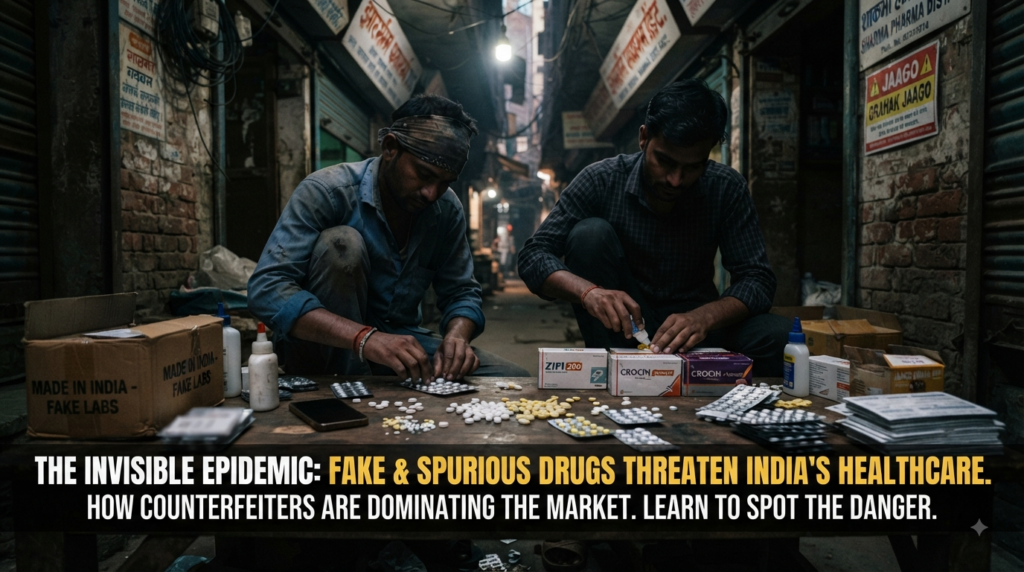
Imagine walking into a local pharmacy, handing over a prescription, and purchasing a strip of life-saving antibiotics or critical cardiovascular medication. You consume it trusting it will heal you. But what if that pill contains nothing more than chalk, talcum powder, or worse—toxic industrial chemicals?
This is not a hypothetical horror plot. It is the grim reality of the counterfeit drug trade silently creeping through the veins of India’s healthcare supply chain. While India is globally celebrated as the “Pharmacy of the World”—supplying affordable generic medicines to millions across the globe—it simultaneously grapples with a massive domestic underbelly of fake, substandard, and spurious drugs.
1. Defining the Threat: Fake vs. Substandard vs. Spurious
To understand the crisis, we must first look at the terminology used by health organizations:
- Spurious (Counterfeit) Drugs: These are deliberate and fraudulent imitations explicitly mislabeled with respect to their identity or source. They may contain zero active pharmaceutical ingredients (APIs), incorrect ingredients, or dangerous toxins.
- Substandard Drugs: These are genuine products manufactured by licensed companies that fail to meet quality standards or specifications due to poor manufacturing practices, degradation, or improper storage.
According to various industry estimates and World Health Organization (WHO) insights, a troubling percentage of medicines circulating in developing nations—including India—are compromised, posing a lethal risk to public health.
2. Why India? The Anatomy of Market Domination by Counterfeiters
The proliferation of fake drugs is driven by a ruthless pursuit of profit margins. Counterfeiters target the Indian pharmaceutical market for several strategic reasons:
A. High Profit Margins with Low Risk
Manufacturing a fake pill costs pennies. Counterfeiters replicate popular high-demand items—ranging from basic lifestyle medications and painkillers to expensive oncology (cancer) drugs, insulin, and heavy-duty antibiotics. Because high-value specialty drugs command steep prices, faking them yields astronomical financial returns, often bypassing the heavy oversight applied to major legal manufacturing plants.
B. Vulnerabilities in the Supply Chain
India’s vast geographical expanse and complex multi-layered distribution network—involving clearing agents, stockists, regional distributors, and independent chemists—create loopholes. In remote or semi-urban areas, tracking every single batch of medication from factory floor to patient is an administrative nightmare.
C. The Rise of Unregulated E-Pharmacies and Digital Marketplaces
While digital health platforms have revolutionized accessibility, the unregulated or poorly monitored corners of online medicine delivery have opened a Pandora’s box. Rogue websites and anonymous online sellers often market discounted prescription drugs sourced from shady grey-market suppliers, bypassing physical verification checks entirely.
D. Consumer Price Sensitivity
In a country where a significant portion of healthcare expenses are paid out-of-pocket, consumers naturally gravitate toward lower prices. Counterfeit syndicates exploit this economic vulnerability by offering popular brands at heavily discounted, “too-good-to-be-true” rates.
3. The Devastating Human Toll
The consequences of swallowing a fake pill extend far beyond a financial scam. They hit at the core of human survival:
- Treatment Failure: When a patient with a severe bacterial infection or chronic illness takes a pill filled with cornstarch instead of an active drug, the disease progresses unchecked.
- Toxic Poisoning: Many illicit manufacturing units operate in unhygienic, hidden back-alleys using industrial-grade dyes and toxic solvents. Consuming these can lead to multi-organ failure, severe allergic reactions, and death.
- Fueling Antimicrobial Resistance (AMR): Substandard and fake antibiotics containing sub-therapeutic doses of active ingredients do not kill pathogens; instead, they expose bacteria to weak concentrations, breeding “superbugs” that are resistant to conventional medicines.
4. How to Spot a Fake: Practical Safeguards for Consumers
While detecting sophisticated counterfeits can trick even medical professionals without laboratory testing, consumers can protect themselves by watching out for red flags:
| Feature | Genuine Medication | Counterfeit / Spurious Sign |
| Packaging & Printing | Crisp, high-resolution text, sharp fonts, and correct alignment. | Blurry text, spelling mistakes, misaligned logos, or faded colors. |
| Batch & Expiry Details | Embossed or clearly printed numbers matching the outer carton. | Smudged, easily erasable, or freshly stamped over old dates. |
| Price Discrepancy | Consistent with the Maximum Retail Price (MRP) set by the manufacturer. | Unusually steep discounts or sold without a proper tax invoice. |
| Source of Purchase | Licensed, reputed retail pharmacies or verified digital healthcare platforms. | Unverified social media sellers, local unlicenced vendors, or shady online pop-ups. |
5. Combating the Menace: The Way Forward
Eradicating the shadow market of spurious drugs requires a multi-pronged approach involving strict legislative action, technological innovation, and societal vigilance:
- Strict Legal Penalties: India’s regulatory bodies—such as the Central Drugs Standard Control Organisation (CDSCO)—alongside state food and drug administrations, must enforce rigorous penal actions, including swift trials, heavy asset seizures, and life imprisonment for convicted counterfeit racketeers.
- Advanced Technological Track-and-Trace: Pharmaceutical firms are increasingly adopting blockchain technology, QR codes, and unique serialization on secondary packaging. This allows patients and pharmacists to instantly scan a product using a smartphone app to verify its authenticity before purchase.
- Whistleblower Mechanisms & Public Awareness: Empowering citizens and local chemists to report suspicious drug batches anonymously can help authorities trace manufacturing dens before they flood the market.
Conclusion
The battle against fake and spurious drugs is a race against time. Protecting the integrity of India’s pharmaceutical ecosystem is not merely a corporate battle for brand protection—it is a fundamental humanitarian necessity. By tightening regulatory screws, embracing digital tracking transparency, and fostering consumer awareness, India can safeguard its citizens and ensure that the “Pharmacy of the World” remains a beacon of genuine healing rather than a canvas for crime.