
Fake Abhayrab Rabies Vaccine Alert: What Happened to Batch KE25012 and What Patients Should Know
When a patient visits a medical facility following an animal bite, receiving an anti-rabies vaccine is not merely a routine preventive measure—it is a critical, life-saving intervention against a viral infection with a near 100% case-fatality rate. Unlike non-critical pharmaceuticals where a minor quality variation might result in temporary discomfort, a failure in rabies vaccine potency can be fatal.
In early September 2026, official communications from India’s apex drug authority, the Central Drugs Standard Control Organisation (CDSCO), alerted state drug controllers regarding suspicious vials labelled as the widely used rabies vaccine Abhayrab bearing Batch KE25012. Laboratory analysis revealed that seized samples failed potency testing, leading to their classification as “Not of Standard Quality” (NSQ) and “Misbranded”. Concurrently, the legitimate manufacturer, Indian Immunologicals Limited (IIL), clarified that the seized vials were illegal counterfeits not manufactured by their facilities.
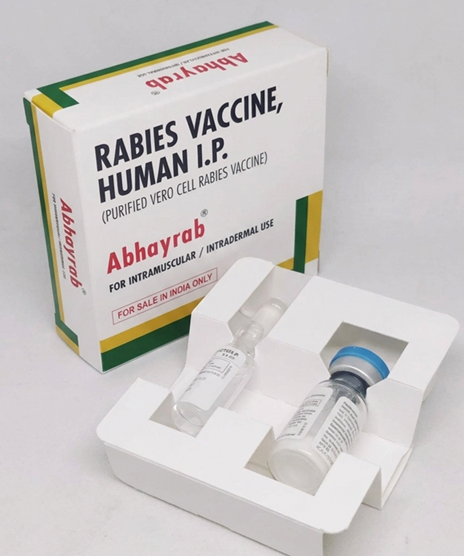
1. What Is Abhayrab Rabies Vaccine?
Abhayrab is a Purified Vero Cell Rabies Vaccine (PVRV) produced by Human Biologicals Institute (HBI), a division of Indian Immunologicals Limited (IIL). It is one of India’s most widely prescribed anti-rabies vaccines, accounting for approximately 40% of the domestic market share and exported to over 40 countries.
Rabies is an acute, progressive encephalomyelitis caused by neurotropic lyssaviruses, transmitted predominantly through the saliva of infected animals via bites or scratches. Once clinical symptoms manifest, rabies is virtually fatal. However, timely administration of post-exposure prophylaxis (PEP)—comprising thorough wound washing, post-exposure rabies vaccination, and Rabies Immunoglobulin (RIG) for severe exposures—is 100% effective in preventing the disease.
The rabies vaccine works by introducing inactivated virus antigens (Louis Pasteur 2061 strain) into the body to stimulate neutralizing antibodies (measured in International Units, IU/mL). For a rabies vaccine to be therapeutically effective, it must strictly comply with mandatory potency criteria (minimum ≥2.5 IU per single human dose) established by the Indian Pharmacopoeia (IP) and World Health Organization (WHO) standards.
2. What Happened in the Abhayrab Batch KE25012 Case?
The controversy surrounding Batch KE25012 stems from an enforcement action conducted by the Crime Branch of the Delhi Police in coordination with the Delhi Drugs Control Department.
On April 22, 2026, authorities raided an unlicensed residential premises in Mukherjee Nagar, Delhi, seizing a stock of suspected pharmaceutical products, including 953 vials carrying the brand name Abhayrab and marked with Batch Number KE25012. Four individuals were subsequently arrested by the Crime Branch in connection with an alleged spurious drug network.
The seized samples were forwarded to the government’s premier testing facility, the Central Drugs Laboratory (CDL) in Kasauli, Himachal Pradesh, for analytical evaluation. In late August 2026, CDL Kasauli released its report, concluding that the seized sample failed the mandatory potency requirement, although it passed tests for identity, sterility, thiomersal, and moisture content. Consequently, the sample was declared Not of Standard Quality (NSQ) and Misbranded.
On August 27, 2026, the Drugs Controller General of India (DCGI) issued an advisory instructing all State Drugs Controllers to maintain strict vigilance over the distribution, movement, and availability of Abhayrab Batch KE25012.
3. Timeline of Events: Batch KE25012 Incident
Understanding the distinction between genuine manufacturing releases and criminal counterfeiting requires a clear chronological perspective based on official records:
| Date | Event / Regulatory Action |
|---|---|
| November 7, 2025 | Indian Immunologicals Ltd. (IIL) receives official Batch Release Certificate (CDL/2025/8392) from CDL Kasauli for genuine Batch KE25012 (83,370 vials). Doses distributed through authorized channels. |
| April 22, 2026 | Delhi Police Crime Branch and Delhi Drug Inspectors raid an unlicensed flat in Mukherjee Nagar, Delhi, seizing suspicious vials labelled as Batch KE25012. |
| May – August 2026 | CDL Kasauli conducts laboratory testing, potency assays, and packaging comparison against manufacturer retention samples. |
| August 27, 2026 | DCGI issues an official directive to state regulators requesting heightened surveillance and enforcement action against suspect KE25012 vials. |
| September 4, 2026 | IIL issues a formal representation to the DCGI highlighting 17 distinct packaging discrepancies, proving the seized vials were spurious counterfeits. |
| September 5, 2026 | CDSCO issues a public notification detailing ongoing law enforcement coordination, confirming four arrests and confirming that no part of the batch was exported. |
4. What Did Laboratory Testing Show?
The evaluation conducted by CDL Kasauli yielded critical parameters that explain both the biological status and physical origin of the seized vials:
- Sterility & Moisture (Passed): The seized liquid passed sterility testing (no biological contamination observed) as well as moisture and thiomersal limits.
- Identity Test (Passed): The sample contained viral antigenic material, confirming it was intended to imitate a rabies vaccine rather than containing pure saline or water.
- Potency Assay (Failed): The sample failed to meet the required antigenicity thresholds necessary to provoke an adequate neutralizing antibody response in humans. This led to the official Not of Standard Quality (NSQ) classification.
- Storage Discrepancy: Officials noted that the seized vials (labelled for storage between 2°C and 8°C) were kept at room temperature at the time of seizure, which accelerates potency degradation.
5. Reported Differences Between Suspected and Genuine Product
When CDL Kasauli compared the seized field samples against the official retention samples submitted by Indian Immunologicals Ltd. during original batch testing, analysts identified 17 specific physical and printing differences.
Documented discrepancies recorded by regulatory and laboratory reports include:
- Cap Color & Hologram: Seized vials had blue caps instead of the authentic green caps, and carried a hologram on the seal where reference vials had none.
- Misspelling on Label: The name of Louis Pasteur (whose strain is used in the vaccine) was misspelt as “L. Posteur” on the seized label.
- QR Code Verification: The 2D QR code printed on the seized packaging failed verification by GS1, the global standards body.
- License & Artwork Numbers: The artwork number was printed as PLM0395/07/22 (instead of PLM0395/08/24), and the diluent manufacturing license number was printed as DD/449 (instead of 30/MD/AP/2013/F/G).
- Unit Errors: Preservative concentration was incorrectly printed as a weight-by-weight (% w/w) figure instead of weight-by-volume (% w/v).
| Feature | Genuine Retention Sample (IIL) | Seized Suspect Sample (Delhi Raid) |
|---|---|---|
| Vial Cap Color | Green Flip-off Seal | Blue Seal |
| Cap Hologram | No Hologram on Seal | Hologram present on Seal |
| Strain Spelling | Correct (“L. Pasteur”) | Misspelt (“L. Posteur”) |
| QR Code Status | Valid GS1 Verification | Failed GS1 Verification |
| Potency Result | Complies (≥2.5 IU/dose) | Failed Potency Assay |
6. What Did Indian Immunologicals Limited (IIL) State?
In response to the regulatory communications, Indian Immunologicals Limited released official statements clarifying its position:
- Non-Manufacture of Seized Vials: IIL emphasized that the physical samples seized from the unlicensed Delhi premises were not produced by its Human Biologicals Institute division.
- Authentic Batch Integrity: The genuine Batch KE25012 (consisting of 83,370 vials) was tested, approved, and released by CDL Kasauli on November 7, 2025 (Release Certificate CDL/2025/8392). These authentic doses were routed strictly through authorized distributors, with zero market complaints reported.
- Request for Legal Action: On August 14 and September 4, 2026, IIL submitted batch manufacturing, quality-control, reconciliation, and distribution records to the DCGI, requesting authorities to trace the illicit origin of the knock-off vials and prosecute the counterfeiters.
7. Is Every Abhayrab Vaccine Fake or Unsafe?
No. A regulatory alert regarding a seized counterfeit lot does not mean that every Abhayrab vaccine available in India is fake or unsafe.
Every legitimate batch of Abhayrab manufactured by IIL undergoes dual testing: internal quality release followed by independent statutory evaluation and batch-release certification by CDL Kasauli before entering the market. Vaccines purchased and administered at government hospitals, accredited healthcare facilities, and licensed pharmacies remain safe and effective.
8. Was the Concerned Batch Exported Outside India?
Official statements from CDSCO and the manufacturer confirm that no part of the suspect counterfeit lot was exported outside India.
9. Decoding Regulatory Terminology: Fake vs. Spurious vs. Misbranded vs. NSQ
Under Indian drug laws—specifically the Drugs and Cosmetics Act, 1940—these terms carry distinct legal meanings:
| Regulatory Term | Legal & Scientific Definition | Practical Implication |
|---|---|---|
| Not of Standard Quality (NSQ) | A drug that fails to comply with pharmacopoeial specifications for identity, purity, strength, or potency upon laboratory analysis. | The drug does not perform as required biologically or chemically. Can occur due to manufacturing flaws or cold-chain breakdown. |
| Spurious Drug | A drug manufactured under a name belonging to another product/manufacturer, or containing an active ingredient substituted entirely or in part by another substance (Section 17B). | Illegal counterfeit. Produced by unauthorized entities attempting to deceive buyers using established brand names. |
| Misbranded Drug | A drug bearing packaging, labeling, or design that is false, misleading, or fails to display statutory details required by law (Section 17). | Packaging does not reflect true product attributes or regulatory compliance details. |
| Counterfeit / Fake | Broad public/international terms (WHO definition) describing products deliberately and fraudulently mislabelled with respect to identity or source. | Encompasses criminal knock-offs produced outside regulated supply networks. |
10. Public Health Risks of Substandard Rabies Vaccines
Rabies is a disease with zero tolerance for therapeutic failure. Unlike systemic bacterial infections where a weak antibiotic might simply prolong illness, a potency-deficient rabies vaccine fails to induce the threshold level of neutralizing antibodies (≥0.5 IU/mL in serum) needed to block viral invasion of the peripheral nervous system.
If an individual bitten by a rabid animal receives a potency-failed vaccine, the virus can travel along peripheral nerves to the central nervous system. Once symptoms appear, fatal encephalitis is inevitable. Counterfeit vaccines also damage public trust in routine immunization programs and legitimate healthcare systems.
11. Guidance for Patients: What Should You Do?
If you or a family member received a rabies vaccination recently, follow these responsible steps without panicking:
- 1. Review Your Vaccination Records: Check your official anti-rabies card, hospital discharge summary, or pharmacy bill for the listed brand name and batch number.
- 2. Identify the Healthcare Provider: If your vaccine was administered at a reputable government hospital, major private clinic, or bought from a registered pharmacy, the likelihood of encountering an illicit batch is minimal.
- 3. Consult a Medical Professional: If your documentation indicates Abhayrab Batch KE25012 administered after November 2025, or if the source of purchase is doubtful, consult your treating physician or anti-rabies clinic promptly.
- 4. Do NOT Self-Medicate or Arbitrarily Restart Vaccination: Never decide to restart or discontinue a vaccination schedule on your own. Qualified doctors will evaluate your animal bite category, time elapsed, and vaccination history to decide if additional booster doses or antibody titers are necessary.
12. Can Consumers Identify Fake Vaccines?
While official anti-counterfeiting measures like GS1 2D barcodes are present on human medicines in India, physical examination alone is insufficient for consumers to verify vaccine authenticity.
Sophisticated illicit operations can replicate packaging designs closely enough to fool the untrained eye. Therefore, consumer safety relies primarily on sourcing discipline: purchasing medications exclusively from licensed retail pharmacies that provide official tax invoices with recorded batch numbers, or receiving care directly at registered healthcare centers.
13. Supply-Chain Lessons for Pharmacists & Students
For B.Pharm, D.Pharm, and practicing pharmacists, the Batch KE25012 incident serves as an essential case study in pharmaceutical vigilance:
Essential Pharmacy Operational Standards
- Authorized Sourcing Only: Procure vaccines strictly from authorized company super-stockists or licensed, verified distributors. Never buy drugs from unauthorized brokers offering steep discounts.
- Invoice Record-Keeping: Ensure every purchase invoice contains the exact batch number, manufacturing date, expiry date, and drug license number of the supplier.
- Cold-Chain Maintenance: Maintain strict temperature monitoring (2°C to 8°C) for rabies vaccines. Cold-chain failure can degrade authentic biological products into Not of Standard Quality (NSQ) drugs.
- Routine Inspection of Physical Stocks: Train staff to check for packaging anomalies, smudged print, unreadable QR codes, or unusual cap colors.
- Reporting Suspicious Goods: If suspicious products are identified, isolate the batch immediately and notify the local Drug Inspector and the CDSCO portal.
14. Role of CDSCO and State Drug Control Authorities
India’s drug regulatory framework relies on a dual structure under the Drugs and Cosmetics Act, 1940:
- CDSCO (Central Level): Headed by the Drugs Controller General of India (DCGI), CDSCO regulates drug imports, approves new drugs, lays down standards, and coordinates national drug safety alerts.
- State Drug Control Authorities (State Level): Responsible for issuing manufacturing and retail pharmacy licenses, conducting routine market sampling, carrying out police-assisted raids on illegal units, and initiating prosecution in court.
- Central Drugs Laboratory (CDL Kasauli): Serves as the national control laboratory for testing and certifying immunobiologicals (vaccines and sera) prior to commercial release.
15. How India Fights Counterfeit and Substandard Medicines
To combat illegal pharmaceutical operations, Indian regulators have instituted several systemic controls:
- Mandatory QR Codes on Top Brands: The Ministry of Health mandated 2D QR codes on the packaging of top drug brands to enable digital authentication of manufacturing details.
- Risk-Based Inspections: Regular joint surveillance drives by CDSCO and state drug inspectors targeting unlicensed premises and high-risk supply chains.
- Monthly NSQ Alerts: CDSCO publishes monthly lists of failed drug samples on its official portal to inform healthcare providers and prompt immediate market withdrawals.
16. Comparing Recent Abhayrab Counterfeit Incidents
Comparing the current incident with an earlier scare helps clarify how illegal operators operate:
| Feature | 2025 Counterfeit Incident | Current 2026 KE25012 Incident |
|---|---|---|
| Batch Number Flagged | KA24014 | KE25012 |
| Primary Source of Alert | Manufacturer alert following market complaints | Police raid on unlicensed Delhi flat & CDL testing |
| International Alerts Issued? | Yes (US CDC, UK HSA, Australia ATAGI issued advisories for travelers) | No export confirmed; issue isolated domestically |
| Enforcement Outcome | Market recall & heightened regulatory vigilance | 4 arrests by Delhi Police Crime Branch; CDSCO alert issued |
17. Confirmed Facts vs. Ongoing Investigation
To prevent unwarranted panic, healthcare professionals should clearly separate verified findings from matters currently under investigation:
| What Is Confirmed | What Remains Under Investigation |
|---|---|
| Seized vials labelled KE25012 failed CDL potency testing. | Whether any fake KE25012 vials slipped into legitimate retail markets. |
| Seized vials showed 17 packaging differences from authentic retention samples. | The exact illegal manufacturing site where fake vials were produced. |
| Genuine Batch KE25012 was legally released by CDL Kasauli in Nov 2025. | Full extent of the criminal distribution network behind the Delhi raid. |
| No part of the suspect counterfeit lot was exported abroad. | Specific antibody status of individual patients who purchased drugs outside licensed channels. |
18. Broader Analysis: Safeguarding Vaccine Trust
The Abhayrab Batch KE25012 case highlights a critical vulnerability in public health: high-demand life-saving biologics are attractive targets for criminal counterfeiters. When bad actors introduce inert or potency-failed products into fake packaging, they exploit public trust for financial gain.
Preventing such threats requires a multi-layered defense: aggressive police enforcement against unlicensed distribution hubs, stringent regulatory oversight by state drug authorities, vigilant procurement practices by pharmacists, and public education on buying drugs exclusively through licensed channels.
19. Key Takeaways
- The recent CDSCO alert applies specifically to illegal, seized counterfeit vials mimicking Batch KE25012.
- Genuine Abhayrab manufactured by Indian Immunologicals Ltd. and distributed through authorized channels remains safe and effective.
- The seized fake vials failed laboratory potency testing despite passing basic sterility and identity checks.
- “Spurious” refers to illegal counterfeits, whereas “Not of Standard Quality” refers to laboratory test failure.
- Patients should verify their vaccination records and consult healthcare professionals if they suspect receiving a fake vaccine—do not self-medicate or arbitrarily restart doses.
- Pharmacists must maintain strict procurement records and source biologicals solely from licensed, authorized distributors.
Frequently Asked Questions (FAQs)
1. What is the Abhayrab vaccine controversy about?
The controversy involves regulatory alerts issued by CDSCO after Delhi Police seized vials labelled as Abhayrab Batch KE25012 from an unlicensed premises. Laboratory testing showed these seized vials failed potency requirements.
2. Which specific batch of Abhayrab was flagged by authorities?
The regulatory alert specifically flagged Batch KE25012.
3. Is every vial of Abhayrab Batch KE25012 fake?
No. Manufacturer records show that authentic Batch KE25012 (83,370 vials) passed official CDL Kasauli testing and was released on November 7, 2025, through authorized channels. The alert concerns counterfeit vials using the same batch number.
4. Are all Abhayrab vaccines currently sold in India unsafe?
No. Legitimate Abhayrab doses supplied to government facilities, hospitals, and licensed pharmacies undergo strict testing and remain safe.
5. What did laboratory testing at CDL Kasauli reveal?
CDL Kasauli found that seized samples passed sterility and identity tests but failed the potency assay, leading to their classification as Not of Standard Quality (NSQ) and Misbranded.
6. What does “Not of Standard Quality” (NSQ) mean?
NSQ means a drug sample failed to meet required laboratory specifications (such as potency, purity, or strength) laid down in the official pharmacopoeia.
7. What is the difference between a spurious drug and a substandard drug?
A substandard drug (NSQ) fails quality specifications (often due to manufacturing or storage issues), whereas a spurious drug is an intentional, illegal counterfeit made by an unauthorized party to imitate a real brand.
8. Was Batch KE25012 exported to other countries?
Official statements from regulators and the manufacturer confirm that no part of the suspect batch was exported outside India.
9. What should I do if I received Abhayrab Batch KE25012?
Check where you received the vaccine. If administered at an authorized clinic or hospital, risks are minimal. If sourced from an unverified vendor, consult your treating doctor for clinical guidance.
10. How can I verify the batch number of my vaccine?
Check the outer packaging, vial label, vaccination record card, or pharmacy receipt issued at the time of administration.
11. Can packaging alone prove a vaccine is genuine?
No. While packaging differences can indicate counterfeits, physical inspection alone is not definitive. Sourcing from licensed supply chains is the best guarantee of authenticity.
12. What should pharmacists do if they suspect a fake vaccine?
Isolate the stock immediately, stop dispensing, notify local Drug Inspectors, and maintain full purchase invoices for regulatory investigation.
13. What is CDSCO’s role in drug safety?
CDSCO sets national drug standards, oversees clinical trials, regulates imports, approves new drugs, and issues nationwide alerts against substandard or spurious medicines.
14. Why is rabies vaccine potency so critical?
Because rabies has a near 100% fatality rate once symptoms appear, the vaccine must have sufficient potency to trigger protective antibody levels before the virus reaches the central nervous system.
15. Was there an earlier counterfeit Abhayrab incident?
Yes. In early 2025, an alert was issued regarding fake doses marked with Batch KA24014. That incident was resolved separately and involved a different batch.
References & Sources
- Central Drugs Standard Control Organisation (CDSCO): Statutory drug alerts and public notices regarding Abhayrab Batch KE25012 issued to State Drugs Controllers (August/September 2026).
- Indian Immunologicals Limited (IIL): Official representation to the DCGI and press clarifications regarding Batch KE25012 retention testing and distribution records (September 4, 2026).
- Central Drugs Laboratory (CDL), Kasauli: Analytical testing certificates and batch-release records for immunobiologicals.
- Times of India: “Abhayrab vials found in Delhi flagged as substandard” (Published September 5, 2026).
- The Economic Times: “Rabies vaccine row: CDSCO flags seized Abhayrab batch was misbranded, 4 arrested” (Published September 5, 2026).
- Hindustan Times: “CDSCO flags substandard anti-rabies vaccine Abhayrab, traces it to Delhi flat” (Published September 6, 2026).
- The Print: “How ‘counterfeit’ vials seized in Delhi raid put Abhayrab rabies vaccine on regulator’s radar” (Published September 6, 2026).
- The Hindu: “Authorities probing ‘counterfeit’ rabies vaccine, says drug regulator” (Published September 5, 2026).
- Drugs and Cosmetics Act, 1940 & Rules 1945: Legal provisions defining Misbranded (Section 17), Adulterated (Section 17A), Spurious (Section 17B), and Not of Standard Quality drugs.
Prepare Smarter for Government Pharmacy Exams
If you are preparing for government pharmacy examinations and want to test your knowledge through practice questions and mock tests, you can access free mock tests on VigyanLok.
Take Free Mock Tests