
Why Are Cancer Medicines So Expensive in India? Understanding the Real Cost of Cancer Treatment
A family sits in a quiet consultation room, trying to process the news that a loved one has been diagnosed with cancer. In those initial overwhelming moments, the immediate focus is on survival, treatment options, and finding the best medical care possible. But very soon, a secondary reality sets in when the treatment protocol is handed over. The family visits the hospital pharmacy and encounters the staggering financial cost of therapy—where a single month’s supply of targeted pills or a single cycle of intravenous immunotherapy can cost tens of thousands, or even lakhs, of rupees.
This scenario creates a profound paradox. India is widely celebrated as the “pharmacy of the developing world,” renowned for manufacturing high-quality, low-cost generic drugs that power public health systems globally. Why, then, are cancer medicines so expensive in India? How can a country capable of mass-producing essential medications still present such steep financial barriers for oncology patients?
The answer is not as simple as blaming a single hospital, pharmaceutical company, or regulatory loop. The cost of modern cancer drugs is driven by a complex web of global research economics, intricate biological manufacturing, regulatory frameworks, supply chain margins, and national healthcare financing structures.
Quick Answer: What Drives Cancer Medicine Prices in India?
Why are cancer medicines so expensive in India? The high cost is not determined by a single factor, but rather by an accumulation of scientific, economic, and systemic drivers:
- High Research & Development Costs: Developing novel oncology drugs requires billions of dollars in investment, with high rates of clinical trial failure that must be recouped.
- Biological Manufacturing Complexity: Modern therapies (like monoclonal antibodies and immunotherapies) are grown in living cells rather than synthesized chemically, requiring sterile, high-tech production facilities.
- Patents and Market Exclusivity: Advanced therapies are protected by international patents, preventing low-cost generic competition for up to 20 years.
- Import Dependence and Logistics: Many cutting-edge oncology drugs and active ingredients are imported, leaving prices vulnerable to currency shifts, import tariffs, and specialized cold-chain shipping costs.
- Supply Chain and Distribution Margins: Trade margins across distributors, stockists, and hospital pharmacies can significantly elevate the final retail price paid by patients.
- Partial Price Control Coverage: While India’s National Pharmaceutical Pricing Authority (NPPA) caps prices on essential, established anti-cancer formulations, newer and advanced targeted therapies often fall outside these ceiling prices.
How Much Does Cancer Treatment Cost in India?
When discussing financial burden, an important distinction must be made between the price of a cancer drug and the total cost of cancer care. A medicine bill is often only one component of a much larger medical expense.
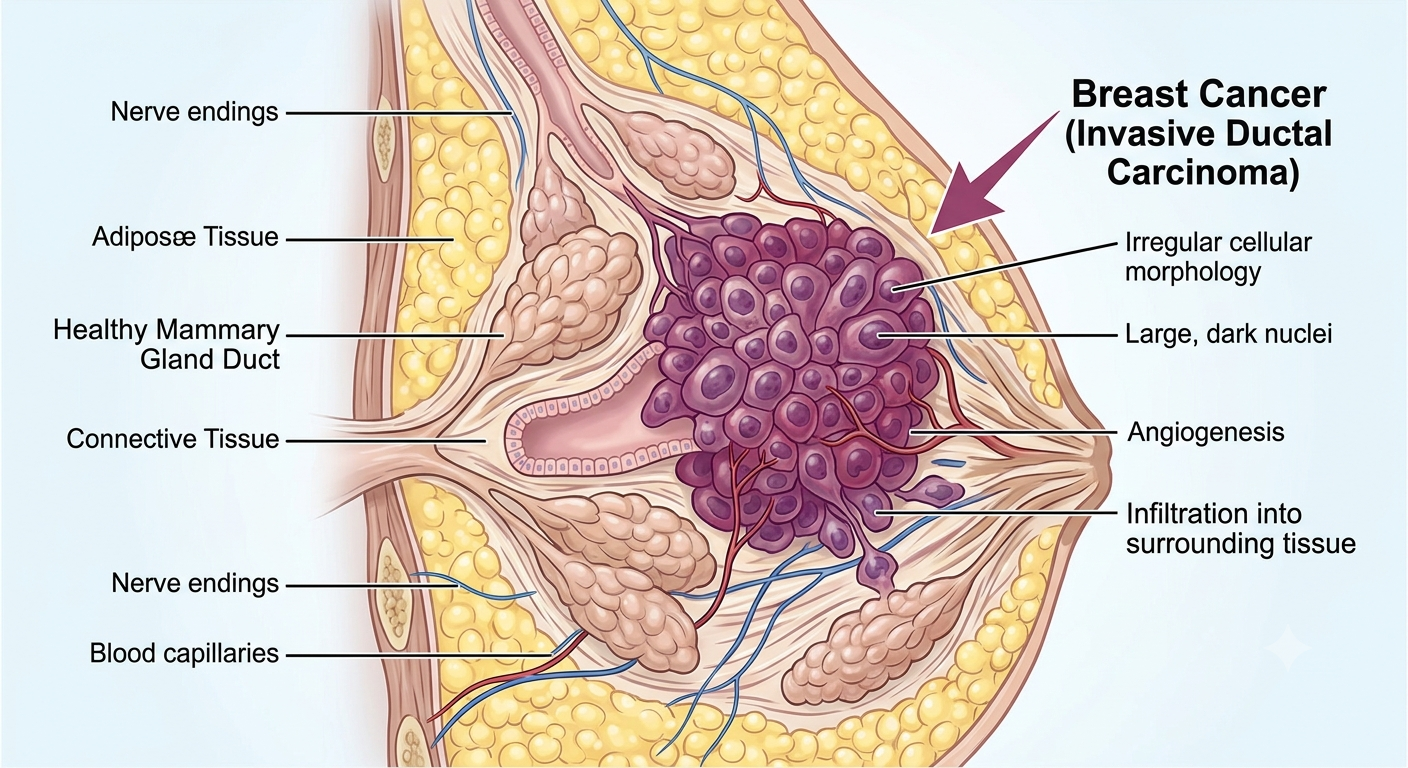
Comprehensive cancer care typically involves several overlapping modalities:
- Diagnostics & Staging: High-resolution imaging (PET-CT, MRI), tissue biopsies, histopathology, and advanced genomic or molecular profiling tests.
- Surgical Intervention: Tumor resection, reconstruction, and associated operating theater and ICU charges.
- Radiation Therapy: Advanced delivery techniques like Intensity-Modulated Radiation Therapy (IMRT) or Stereotactic Body Radiotherapy (SBRT).
- Systemic Pharmacotherapy: Chemotherapy, targeted therapy, immunotherapy, and hormonal agents.
- Supportive Care: Antiemetics, colony-stimulating factors (to boost white blood cells), blood transfusions, pain management, and nutritional support.
- Hospitalization & Monitoring: Inpatient room charges, routine laboratory work, and long-term follow-up consultations.
For a patient undergoing multi-month cycles of treatment, the cumulative financial drain extends far beyond the pharmacy counter. However, oncology drugs frequently represent the largest recurring out-of-pocket expense, particularly when therapy involves continuous administration of newer molecular entities.
The Economics of Drug Discovery and Research
To understand why a newly launched cancer drug enters the market with a steep price tag, one must examine the long and risky pipeline of pharmaceutical drug development.
Target ID & Leads
Cells & Animal Models
Phases I, II, & III
CDSCO, FDA Review
The journey from a laboratory concept to a prescription medicine spans 10 to 15 years. The process involves several distinct phases:
- Target Identification & Preclinical Research: Scientists analyze cancer biology to find specific proteins or pathways driving tumor growth, testing thousands of potential chemical compounds in cell culture and animal models.
- Phase I Clinical Trials: Small-scale human trials designed primarily to evaluate safety, dosage tolerance, and metabolic side effects.
- Phase II Clinical Trials: Medium-scale studies evaluating whether the drug demonstrates actual clinical efficacy against specific tumor types.
- Phase III Clinical Trials: Large-scale, randomized controlled trials involving hundreds or thousands of patients worldwide to compare the new drug against existing standard-of-care treatments.
- Regulatory Review & Post-Marketing Surveillance: Rigorous evaluation by health authorities (such as the US FDA, EMA, or India’s CDSCO) followed by ongoing Phase IV monitoring for rare side effects.
The fundamental financial driver here is attrition. Statistics show that over 90% of oncology drug candidates that enter Phase I clinical trials fail to reach regulatory approval due to lack of efficacy or unacceptable toxicity. The capital spent on those failed molecules does not disappear; it must be absorbed by the revenue generated by the small percentage of drugs that successfully reach the market.
Patents and Market Exclusivity
When a pharmaceutical company develops a brand-new therapeutic compound, it secures patent protection. Under international agreements like the WTO’s TRIPS agreement—to which India is a signatory—a patent grants the innovator exclusive commercial rights to manufacture and market the drug, typically for 20 years from the filing date.
During this period of market exclusivity:
- Other pharmaceutical manufacturers are legally prohibited from copying the exact molecular formulation.
- The innovator company operates without direct generic competition for that specific drug.
- The manufacturer sets the price based on market value, health system negotiations, and development cost recovery.
Once the patent expires, generic manufacturers can submit bioequivalence studies to regulatory agencies and launch generic versions. The entry of multiple generic competitors typically drives prices down significantly—sometimes by 70% to 90%. However, for newer, patent-protected cancer drugs, the absence of market competition keeps prices high globally, including in India.
Traditional Chemotherapy vs. Advanced Therapies
The landscape of cancer treatment has shifted over the past two decades. Understanding price differences requires looking at how different classes of cancer medicines are designed and manufactured.
| Feature | Traditional Chemotherapy | Targeted Therapy | Immunotherapy |
|---|---|---|---|
| Primary Mechanism | Kills rapidly dividing cells throughout the body | Blocks specific mutated proteins/pathways in cancer cells | Stimulates the patient’s own immune system to attack tumors |
| Molecule Type | Small-molecule chemical synthesis | Small molecules or large monoclonal antibodies | Complex biological macromolecules (Checkpoint Inhibitors) |
| Production Process | Chemical synthesis in standard reactors | Chemical synthesis or recombinant DNA cell culture | Advanced mammalian cell culture and complex purification |
| Manufacturing Cost | Low to Moderate | High | Very High |
| Testing / Biomarkers | Standard clinical staging | Requires specific genetic testing (e.g., EGFR, ALK, HER2) | Requires biomarker testing (e.g., PD-L1 Expression, MSI-H) |
Visualizing Cancer Cell Treatment Mechanisms
Attacks all rapidly dividing cells globally (both cancer cells ● and healthy cells ●).
Locks specifically onto mutated proteins/receptors on cancer cells, sparing normal healthy tissue.
Why Targeted Cancer Therapies Are Expensive
Targeted therapies interfere with specific molecules responsible for tumor growth and survival. Unlike broad-spectrum chemotherapy, these drugs require precise diagnostics. For instance, drugs targeting EGFR mutations in non-small cell lung cancer or HER2 overexpression in breast cancer only work for patients who test positive for those specific genetic markers. Because the eligible patient population for a niche targeted drug is smaller, manufacturers price these therapies higher to recover development costs over a smaller volume of treatments.
Why Immunotherapy Commands Premium Pricing
Cancer immunotherapy—particularly immune checkpoint inhibitors targeting PD-1, PD-L1, or CTLA-4 proteins—blocks the “brakes” that cancer cells place on the immune system, allowing T-cells to recognize and destroy tumors. Immunotherapies are biological drugs grown using complex genetic engineering inside living mammalian cell lines. The ongoing maintenance of cell cultures, stringent sterility requirements, single-batch risk, and intricate purification processes result in high production costs.
Biological Medicines and the Role of Biosimilars
A common question arises: If India produces low-cost generic copies of chemical medicines, why can’t it do the same for biological cancer drugs?
e.g., Imatinib
Identical generic copy possible
e.g., Trastuzumab
Complex protein; results in a “Biosimilar”
- Small-Molecule Generics: Chemical drugs have simple, fully defined structures. A generic version contains the exact same active pharmaceutical ingredient (API) as the original drug. Demonstrating bioequivalence is straightforward and comparatively inexpensive.
- Biologics and Biosimilars: Biologics are large, highly complex protein structures produced by living organisms. Because no living cell culture can be duplicated identically, a follow-on version of a biological drug cannot be called an “exact generic”. Instead, it is classified as a biosimilar.
Supply Chain Dynamics: APIs, Manufacturing, and Trade Margins
Even after a drug is formulated, several commercial and logistical layers impact the final retail price in Indian pharmacies.
- Active Pharmaceutical Ingredient (API) Dependence: Although India is a hub for finished formulations, the domestic industry relies heavily on imported APIs and raw materials. Currency shifts and import tariffs directly impact domestic production costs.
- Cold-Chain Logistics: Biological drugs require an unbroken cold chain maintained between 2°C and 8°C from the factory to the pharmacy counter.
- Trade Margins: At each distribution step, trade margins and handling costs are added, elevating the final Maximum Retail Price (MRP).
Price Regulation in India: NPPA, DPCO, and NLEM
To protect patients from excessive pricing, the Government of India regulates drug prices through dedicated regulatory bodies and legal mechanisms.
Key Functions of National Pharmaceutical Pricing Authority (NPPA)
Fixes and revises ceiling prices of essential controlled drugs & formulations under DPCO.
Monitors drug availability across the nation and prevents artificial shortages or hoarding.
Recovers amounts overcharged by manufacturers from consumers exceeding ceiling prices.
Collects market price data, studies cost trends, and monitors non-scheduled formulation prices.
| Term / Regulatory Tool | Primary Agency / Basis | Direct Impact on Cancer Medicine Prices |
|---|---|---|
| NPPA | Independent Executive Authority | Fixes, monitors, and enforces ceiling prices and trade margin caps. |
| DPCO 2013 | Statutory Order under Essential Commodities Act | Provides the legal framework to enforce price controls on scheduled drugs. |
| NLEM 2022 | Ministry of Health & Family Welfare | Identifies essential anti-cancer drugs that must be subject to price caps. |
| Trade Margin Rationalization (TMR) | NPPA Policy Mechanism | Caps trade margins (often at 30%) for non-scheduled anti-cancer drugs. |
According to official NPPA repository data, the government actively regulates 131 anti-cancer formulations under scheduled ceiling price notifications.
Branded vs. Generic Cancer Medicines
Understanding medicine labels helps navigate pharmacy choices:
- Innovator Medicine: The original drug developed by the patent holder, carrying the highest price tag.
- Branded Generic: Manufactured by Indian companies after patent expiration, marketed under a brand name at significantly lower costs.
- Unbranded Generic: Sold directly under the chemical name without promotional costs, typically offering the most economical option.
Frequently Asked Questions (FAQ)
References
- Pramesh, C. S., et al. (2014). Delivery of affordable and equitable cancer care in India. The Lancet Oncology, 15(6), e223-e233.
- Hay, M., et al. (2014). Clinical development success rates for investigational drugs. Nature Biotechnology, 32(1), 40-51.
- Verma, R., & Foster, C. (2021). Financial toxicity of novel oncology therapies in low- and middle-income countries. Journal of Global Oncology, 7, 112-124.
- Blackstone, E. A., & Fuhr, J. P. (2013). The economics of biosimilars. American Health & Drug Benefits, 6(8), 469-478.
- Department of Pharmaceuticals, Ministry of Chemicals and Fertilizers, Government of India. (2013). Drugs (Prices Control) Order, 2013.
- National Pharmaceutical Pricing Authority (NPPA). (2026). Therapeutic Category-wise Ceiling Price List: Anti-Cancer Formulations. Government of India. Available from: nppa.gov.in
Suggested Reads on VigyanLok
Explore more in-depth guides on pharmaceutical science and Indian health regulations:
Preparing for a Government Job? Start Your Preparation for Free
Access free exam preparation resources on VigyanLok, including mock tests, curated study materials, previous-year question papers, and official recruitment updates.
Explore Free Government Job Prep